

In a business review recently, the team came in with a recommendation that was much better than the usual first cut. The presentation was well structured. The analysis was coherent. The options were clearly laid out. AI had clearly helped them do in a few hours what may earlier have taken a few days.
My first instinct was to stay quiet. The team had done the work. The momentum was good. Why interrupt it? But as the discussion unfolded, it became clear that the presentation was not the issue. The harder questions were still open. Which customer signal mattered most? Which risk were we prepared to take? Which trade-offs had to be considered?
That made the decision to step in less obvious. Too much involvement could confuse the team. Too little involvement could let the recommendation move ahead before the assumptions had been properly tested.
AI will make this more common. Teams will be able to research, synthesize, draft and analyze faster. The first version of the work will often look stronger. Leaders will have to look past the polish and decide whether to give the team room, press on the assumptions, add context or stay closer before the decision moves forward.
That is why the usual debate on leadership involvement is feeling too limited. Some leaders are naturally “hands-on”, diving into details and staying close to execution. Others are more “hands-off”, preferring to direct from a distance and trusting their teams to work out the rest.
This simplistic framing misses a larger truth.
Leadership effectiveness rarely depends on choosing one style and sticking to it through every situation. It depends on understanding where a leader’s involvement creates value. And where it gets in the way.
Generative AI makes this question more urgent. As AI changes how work gets done, leaders will need to be even more intentional about where they intervene and where they build autonomy.
This week, let’s explore “hands-on, hands-off” leadership in the AI age. What are the risks of veering too far in either direction? How can leaders strike a balance and make better choices about where to allocate their time and attention?
Being close to the work is often an advantage. Leaders know their customers, products and operating reality. They spot problems and opportunities earlier. Their involvement raises standards, sharpens decisions and improves execution. Yet the same instinct can become limiting and slide into micromanagement – a well-documented failure mode for leaders. Decisions begin to accumulate at the top. Work slows down. So does innovation. Teams hesitate to act and stop exercising their own judgement.
The opposite extreme is just as costly – and much less discussed. Leaders who pride themselves on staying out of the way frame distance as empowerment. They stay above the details, calling it autonomy. But their teams experience it as absence. Problems compound, standards erode. Left to interpret things on their own, teams make vital decisions without enough context. Work moves forward, but not always in the right direction.
Founder Mode
This tension plays out visibly when companies scale, when founders shift from deep engagement to delegation. With this shift, however, something vital can get lost. Teams begin working in ‘black boxes’, without a clear understanding of broader vision and strategy. Rather than feeling empowered, they can feel siloed and disconnected.
Y Combinator co-founder Paul Graham talks about the “founder mode”. Graham argues that while a 20-person startup and a 2000-person company require different approaches, traditional “manager mode” is not the answer. What is needed is a type of leadership that sits between detached delegation and total immersion.
The Leadership Balance
The question, then, isn’t simply: Should I be a hands-on or hands-off leader?
The better question is: Where does my involvement create value. And where does it create dependency, delay or fear?
Good leadership requires the judgement to move between different levels of involvement at different moments. A strategic pivot may require coaching. Creative experiments need space. High-risk decisions demand close attention. An experienced team may simply require trust.
At high-performing companies like Amazon, Toyota and Danaher, senior leaders see themselves as key participants in shaping how work happens, embedding a deep level of care into how teams operate. Writing in the Harvard Business Review, researchers Scott Cook and Nitin Nohria share their findings:
[These leaders] are not inserting themselves into every decision or displacing their teams. Instead, they act as teachers and system builders…They don’t meddle—they coach. They don’t override—they elevate. They don’t hoard decision rights—they teach others how to make sound decisions on their own.
Key Distinctions
Hands-on leadership is not the same as micromanagement. It adds value by bringing:
- richer context
- higher standards
- better judgement
- faster learning
- customer closeness
- protection from avoidable mistakes
Micromanagement happens when involvement becomes:
- control disguised as quality
- interference without added insight
- constant approval seeking
- leader comfort at the cost of team growth
Similarly, hands-off leadership isn’t automatically empowerment. Good hands-off leadership nurtures:
- ownership
- speed
- trust
- experimentation
- confidence
Whereas poor hands-off leadership creates:
- misalignment
- drift and stagnation
- uneven standards
- hidden problems
- avoidable rework
The goal isn’t maximum engagement or maximum distance. It is calibrated involvement.
AI Raises the Stakes
AI is changing the conditions for leadership oversight. In the past, leaders often got involved because they had more experience, more information or stronger pattern recognition. As teams gain access to better tools for research, analysis, synthesis, drafting and decision support, this gap will narrow.
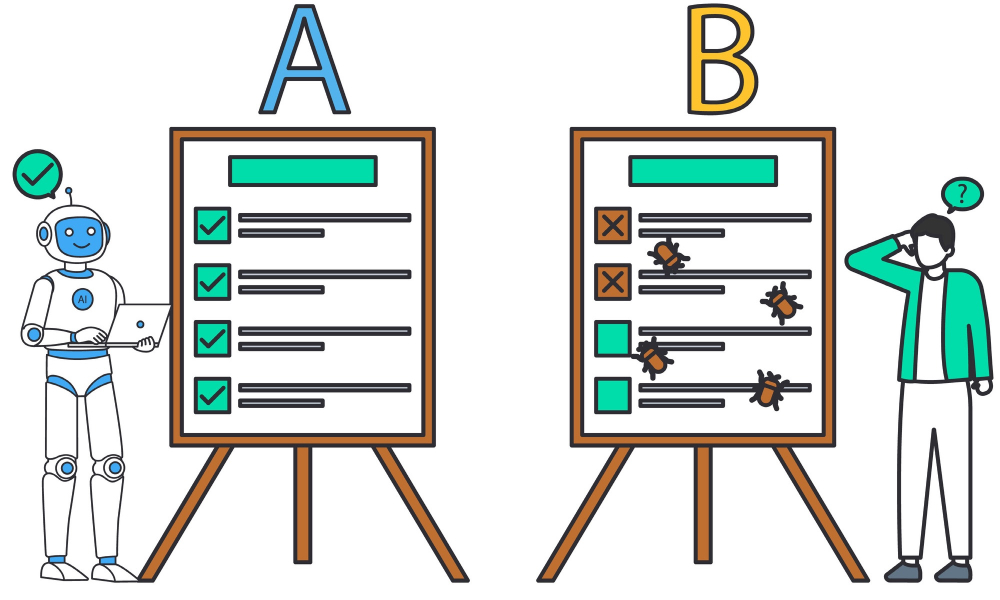
But AI will also create new risks. Work may look polished even when the underlying thinking is weak. Teams may rely on AI-generated recommendations without grasping their limitations. They may outsource reasoning without realising it.
Leaders can’t simply step back because AI makes teams more productive. Nor can they try to inspect everything manually. They need to shift their involvement.
Hands-on, Hands-off Leadership in Practice
Effective leaders treat involvement as something to be adjusted continually. The following six suggestions can help:
1. Interrogate your involvement.
Before stepping in, ask yourself: What will improve if I become involved? If the answer is clarity, judgment, standards or risk reduction, step in. If the answer is only personal reassurance, habit or control, step back. This discipline prevents leaders from becoming a bottleneck while ensuring they remain engaged where they genuinely add value.
2. Be hands-on at the start.
Many leaders intervene too late. They stay away during problem definition and then critique the output. That sequence often produces frustration on both sides. A better choice is to be involved early in framing:
- What problem are we solving?
- What does success look like?
- Which trade-offs matter most?
- What should not be compromised?
- Who needs to be consulted?
Then step back and let the team work.
3. Replace approval with operating checkpoints.
The approval model – where all work flows upwards to a leader who signs off – is sluggish and creates dependency. Instead, leaders can create clear checkpoints before important decisions. For example, major customer commitments, pricing changes, senior hiring or strategic pivots. This directs leadership involvement to the moments that warrant it, without slowing down everything else.
4. Use AI to cut managerial noise.
With AI tools, you can spend less time chasing updates, reviewing routine drafts and comparing options. The time recovered can be invested in setting decision principles, defining quality standards and catching flawed assumptions before they compound. You can also focus on coaching and building learning loops for teams.
5. Train teams to use judgment, not just tools.
The real task in an AI-augmented team isn’t ensuring that everyone knows how to use the tools. It is ensuring that people develop the judgement to use them well. That means helping teams understand:
- when AI strengthens their work and when it weakens it
- when to trust an output and when to question it
- when to slow down and when to escalate
AI can improve output, but leaders still need to build discernment. As a starting point, HBS professor Manuel Hoffman recommends a thorough task audit to identify exactly where leaders and teams can benefit from automation.
6. Make autonomy intentional.
Not every person, team or decision needs the same level of oversight. A useful frame could be:
- Low risk, high capability: step back and provide space
- Low risk, low capability: provide coaching and feedback
- High risk, high capability: set checkpoints and standards
- High risk, low capability: stay closely involved
This frame avoids one-size-fits-all leadership. To use it successfully, leaders will need clarity around two things: how roles have evolved with AI and what level of support people and teams need to perform at their best.
Importantly, calibration isn’t a one-time exercise. People develop. Teams mature. Circumstances change. Leaders should regularly reassess their level of support.
The leaders who succeed in the AI age will be those who can move fluidly between detail and distance. They will stay close enough to judgement, standards and direction – but far enough to let people build ownership, speed and confidence.
Leadership requires the situational intelligence to know when to step in, when to guide and when to leave the room. This hands-on, hands-off approach offers us a better, more balanced way to lead our teams into the future.




Comments