
Picture this. It is review season. HR has sent one reminder, then another, and by the third one you can sense the temperature changing.
You are late, not because you don’t care about your team, but because you do. You cannot bring yourself to write, “Strong performer. Good team player. Needs to improve communication,” and move on.
So you go back through notes, project updates and messages, trying to piece together the year: the client issue that was handled well, the project that went off track, the person who steadied the team when things were stretched. All of it now has to fit into the HR portal’s innocent-looking boxes: strengths, development areas, overall rating.
This is the part of the process most managers dread. Not the conversation itself, but the hours spent trying to convert a year of messy, uneven, human performance into something accurate, fair and useful.
And now AI has entered the process. Many managers are already using generative AI tools to organise information, structure feedback and write drafts. Companies like Citi, JPMorgan and BCG are embedding AI directly into their evaluation systems.
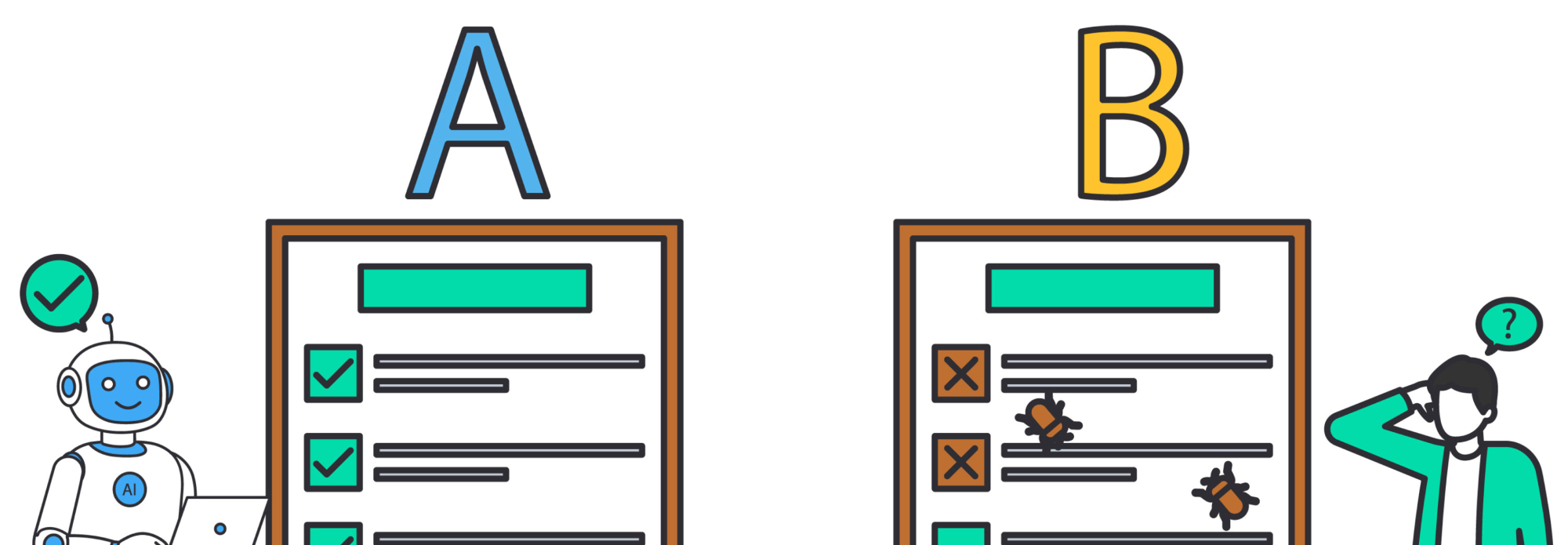
Supporters argue this could reduce bias, improve consistency and save precious time. Critics warn that it risks making an already flawed process even more impersonal and disconnected from real work, along with additional risks such as surveillance.
This week, let’s dive into a hotly contested question: will the use of AI make performance reviews more effective? What are the pros and cons? And how can we use this technology to sharpen evaluation rather than diluting it?
The attraction of using AI for performance reviews is obvious. Overwhelmed managers can reduce their administrative burden by outsourcing time-intensive tasks to technology. BCG reportedly found that its internal AI assistant has slashed review-writing time by 40%. Other companies are using AI tools to address bias, mine performance data for hidden patterns, and link employee achievements to broader organisational goals.
The debate is no longer whether AI belongs in performance evaluation, but how we can use it enhance judgment, effectiveness and transparency – instead of reinforcing old flaws and introducing new dangers.
As AI continues to push into uncharted territory, there is no clear path forward. Some questions remain highly contentious; for instance, should AI analyse employees’ work emails to uncover insights? Leaders at SHRM, the world’s largest HR association, recommend leaving emails out of the equation, suggesting that AI may weigh these too heavily at the expense of more valuable performance signals. Experts have also raised concerns around privacy violations and loss of employee trust.
On the other hand, Chrysanthos Dellarocas, Professor of Information Systems at Boston University, points out that work emails are vital evidence of strategic thinking – which AI can help detect and capture as part of the evaluation.
When a flawed system meets a powerful technology
The debate is unfolding against the backdrop of a process many people already consider ineffective. In a 2024 Gallup survey of Fortune 500 companies, a mere 2% of CHROs felt their performance management systems worked, and only 22% of employees felt their appraisals were fair and transparent.
Research has shown that traditional performance reviews suffer from inconsistency, favouritism and poor correlation with actual performance. Prone to selective memory and bias, managers often give too much importance to recent events and subjective impressions. Employees frequently describe reviews as incomplete or overly dependent on individual manager style. Managers, meanwhile, complain about the time and effort required to complete evaluations for multiple team members.
AI has the potential to fix some of these problems, offering advantages such as:
- Less administrative overload. AI tools can quickly synthesise, summarise, write and amend – an invaluable support for time-strapped managers.
- Comprehensive assessment. With the ability to collate and analyse vast amounts of data, AI reveals an evidence-based picture of performance through the year.
- Greater consistency. AI systems can align frameworks, metrics and language across managers and departments, thus reducing extreme variation.
- Objective findings. Data-driven insights help to counteract the effects of managerial bias and faulty memory.
- Ongoing evaluation. When embedded into workplace platforms, AI can gather and share performance data in real time.
But AI may also intensify existing problems and create new risks, including:
- Polished yet weak evaluations. Poor-quality reviews may appear credible simply because the language is persuasive.
- New inaccuracies. Known to hallucinate, exaggerate and invent ‘facts’, AI can introduce errors and erode credibility.
- Over-reliance on metrics. If AI prioritises what’s easiest to measure, it may miss the work that matters most – strategic insight, conflict resolution, mentorship.
- Hidden bias. When historical data, manager inputs or organisational structures are skewed, AI may reinforce existing prejudice.
- Surveillance creep. The search for richer data may lead to aggressive monitoring of employee communications and behaviour.
- Detached feedback. Generic, smooth-sounding reviews feel impersonal, undermining the relationship between manager and team member.
- Ethical violations. Disclosing employees’ personal information or sharing company data with external AI systems may be an ethical breach.
What smarter AI adoption looks like
As AI takes on a larger role in performance reviews, we must decide where the technology strengthens evaluation – and where human judgment remains indispensable.
For managers: use AI to enhance your evaluations
1. Input first, refine second.
Write your core observations before involving AI. Use the technology to structure drafts, improve clarity or adjust tone – rather than outsourcing the substance of your judgment.
2. Anchor in specifics.
Vague feedback becomes even vaguer when filtered through AI-generated language. Build reviews around concrete evidence like project wins, problem-solving episodes and behavioural moments.
3. Spell out context.
Explicitly tell AI what success looks like for each team member. Identify the company goals connected to their daily work. Provide relevant context for absences, slower turnarounds, etc.
4. Check everything.
All AI-generated drafts must be closely vetted. Verify the facts. Check for exaggerated positivity and overly formal criticism. Ensure that you personally agree with every part of the review before sharing it.
5. Balance metrics with invisible work.
Use AI to not only capture metrics but also account for contributions that don’t appear on dashboards. Document examples of collaboration, conflict resolution and strong decision-making.
6. Protect trust boundaries.
Avoid feeding sensitive personal information into AI systems. Employees need confidence that any private information shared with you stays with you.
For leaders: rethink the role of AI in performance management
1. Prioritise evidence over narratives.
Instead of producing increasingly polished reviews, move the focus to capturing deeper evidence of work in action. Deployed thoughtfully, AI can uncover invisible contributions that drive success.
2. Define boundaries.
Without clear rules, AI-assisted evaluations can quickly drift into employee surveillance. Specify which data sources are acceptable, which are off-limits, and where human interpretation is mandatory.
3. Keep humans accountable for judgment.
AI can support the process but managers should remain ultimately responsible for ratings, developmental feedback and promotion/pay recommendations.
4. Build visibility into the process.
People are more likely to trust AI-assisted evaluations when they understand how information is gathered and interpreted. Build transparency around inputs, safeguards and review processes.
5. Understand the limitations.
Reducing administrative burden is valuable but shouldn’t become the end goal. Without human oversight, AI can distort data, flatten nuance and introduce errors – making performance reviews largely useless.
6. Move beyond annual summaries.
Consider using AI tools to support more continuous feedback systems that track learning, success and development over time rather than crunching it all into a single annual event.
The emerging use of AI in performance reviews has raised critical questions around trust, fairness and effectiveness at a time when many already doubt the value of traditional evaluation systems. AI could help address some of these fundamental issues – or it could accelerate an already strained process, rendering it completely ineffective.
The most crucial thing to realise is that AI isn’t a silver bullet. Its usefulness is shaped entirely by how well we use it. If we hand performance reviews to machines without reconsidering what meaningful evaluation actually requires, we will automate existing problems while introducing new ones in the bargain. When used with discipline and care, however, AI could help transform a bureaucratic exercise into a more accurate, credible and useful reflection of performance.





Comments